
Conejos County Criminal Court Cases
Conejos Combined Court houses two trial courts in the 12th Judicial District. Conejos District Court hears felonies and other district-level matters. Conejos County Court handles misdemeanors, traffic cases, and lower criminal matters. A case number often signals the lane: CR identifies a district criminal case, M a county misdemeanor case, and T a traffic case. Those class codes organize files; they do not describe guilt or the final offense.
The Colorado Judicial Branch clerk, not the elected county Clerk and Recorder, keeps Conejos County criminal case files. Felix Gallegos is the listed Clerk of Court. Town municipal courts retain ordinance cases, and no unified municipal portal was found. Start with the court named on the summons, notice, or case number.
The official court page also documents the current records channel shown below. Its image confirms that court information should come from the Judicial Branch rather than a similarly named county office.
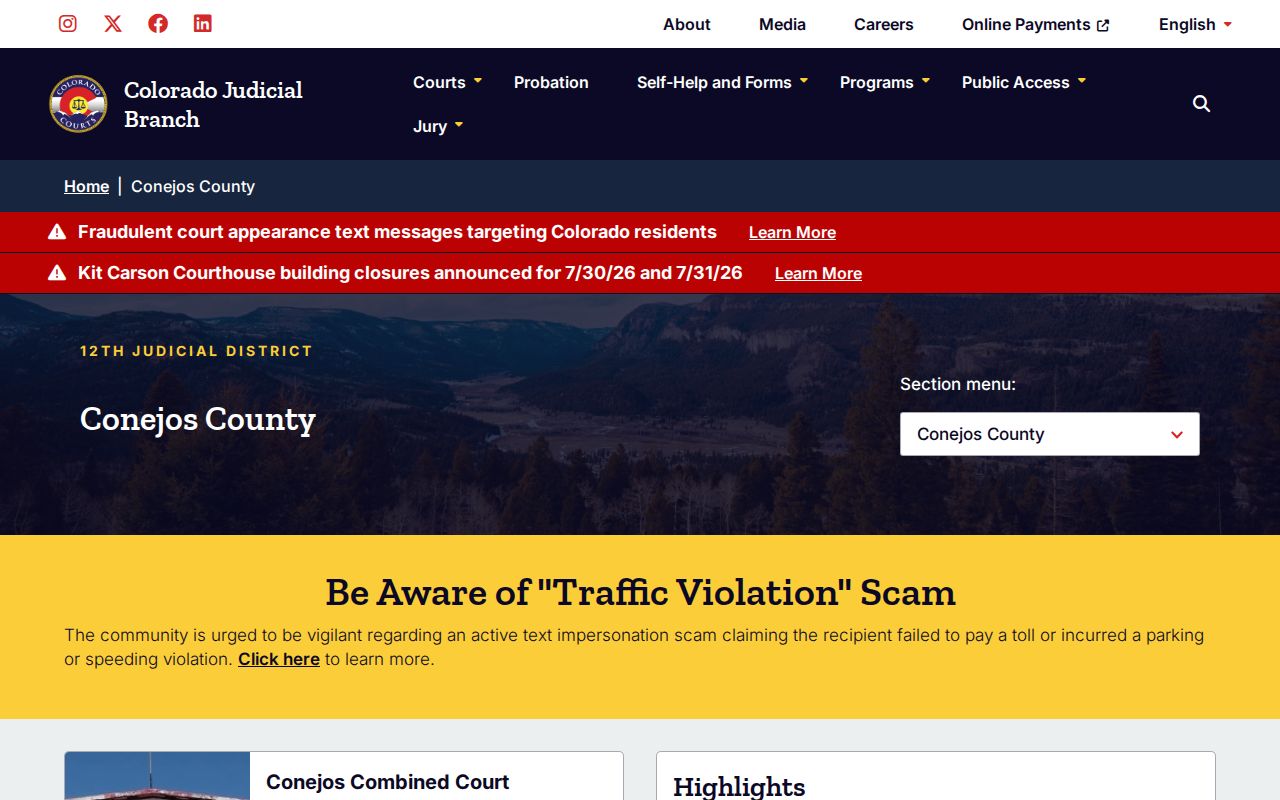
This court page is the live source for closure notices, contact details, WebEx rooms, and location changes.
Conejos Court Records After Fire
A courthouse fire changed in-person access. The Judicial Branch says proceedings and counter service moved to S.P.M.D.T.U. Concilio Superior, 603 Main Street, Antonito, effective July 9, 2025. The counter operates weekdays from 8:00 a.m. to 4:00 p.m., excluding state holidays. Court mail still goes to Conejos Combined Court, P.O. Box 128, Conejos, CO 81129.
Conejos Combined Court
Temporary counter: 603 Main Street
Antonito, CO 81120
719-376-5465
ConejosClerk@judicial.state.co.us
Monday-Friday, 8:00-4:00
Always use the location printed on a summons or hearing notice because a trial may be assigned elsewhere. A remote appearance is not automatic. A party files a motion under Chief Justice Directive 23-03, and the court decides it.
Searching Conejos County Case Records
The free Colorado Judicial Branch Docket Search can narrow results to Conejos County. It shows scheduled proceedings, not every historic event or filed document. At least one filter besides date is required. A precise case number is best; a name plus a reasonable date window is the next useful route.
- Select the 12th Judicial District or Conejos County, then choose the court type if known.
- Enter the full case number, or search an individual by first and last name.
- Narrow the date, case class, courthouse, or division to avoid unrelated results.
- Read the hearing type, appearance type, courtroom, date, and location carefully.
- Ask the clerk for named pleadings, orders, or a certified final disposition.
The source image below shows the official Conejos-filtered search form. It helps explain why a broad name search can return only calendar events.
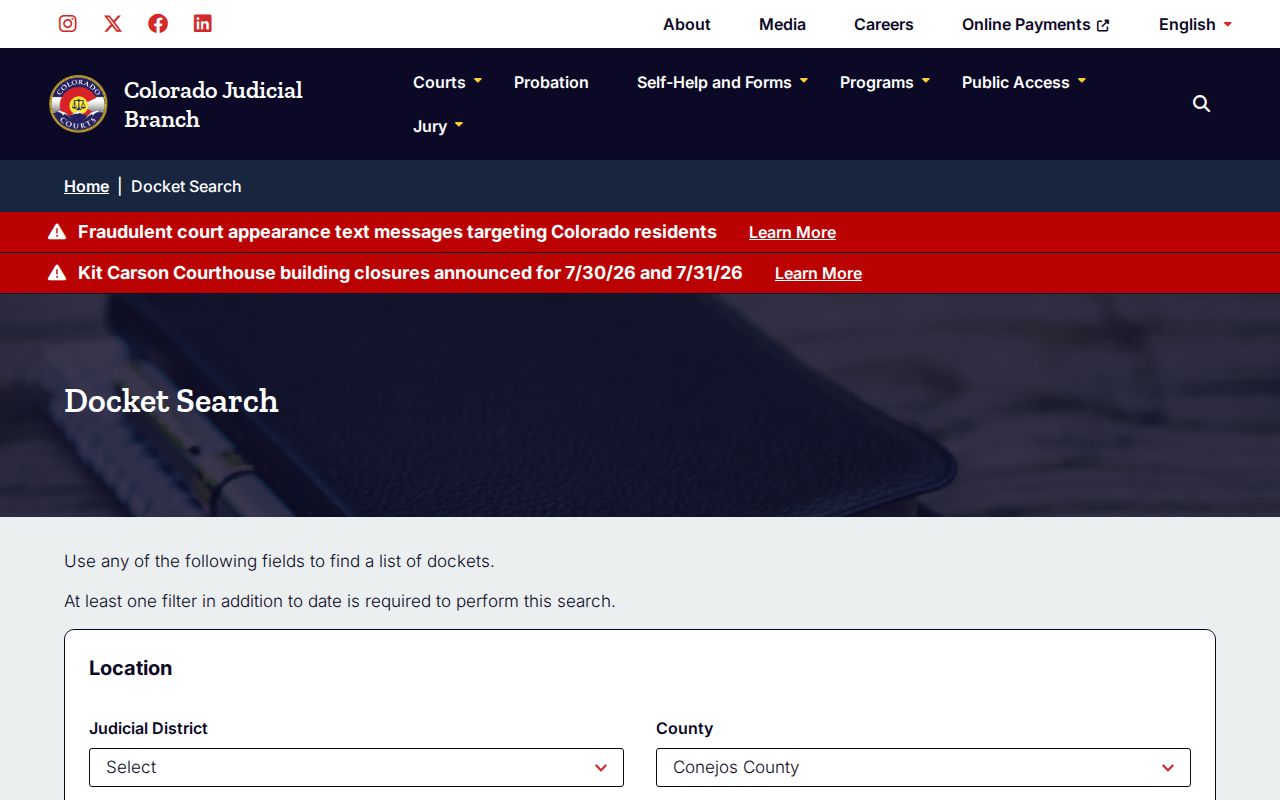
The docket can be printed or exported, but neither option turns schedule data into the complete court file.
| Field | Type | Use |
|---|---|---|
| Judicial District / County | Dropdown | Choose 12th and Conejos |
| Date Range / Specific Date | Date controls | Date plus another filter is required |
| Case Class / Year / Sequence | Dropdown and text | Build or narrow a case number |
| Individual | Name fields | Search a displayed party |
| Attorney | Name or bar number | Narrow by counsel |
Conejos Case Codes in Plain Terms
Calendar language can look conclusive when it is not. “Return Filing of Charges” names a scheduled event. It does not mean the person was convicted. “Hearing on Petition to Seal” shows that a request will be heard, not that the judge granted it. The signed order controls.
- Advisement
- The first court explanation of charges and rights.
- Arraignment
- The stage at which a formal plea is entered.
- Disposition
- The outcome of a charge, such as dismissal, acquittal, plea, or verdict.
- Mittimus
- The order that commits a person to custody.
- Deferred judgment
- A plea held subject to court-ordered conditions.
Read each entry beside the case number and date. A later signed judgment may supersede what an earlier hearing label seemed to suggest.
Inside a Conejos County Case File
The clerk-held file records the prosecution as filed and resolved. It is distinct from the sheriff’s probable-cause report and jail booking sheet. Filed charges can differ from the officer’s initial allegation. The court judgment, not a booking label, states the adjudicated result.
| Complaint or information | The formal charges placed before the court. |
|---|---|
| Docket and notices | Filed events, hearing dates, and appearance instructions. |
| Motions and orders | Party requests and the judge’s rulings. |
| Plea and disposition | The plea plus each charge’s final result. |
| Judgment and sentence | The controlling outcome, penalties, and conditions. |
| Financial ledger | Court-ordered costs or balances when publicly available. |
The inspected public schedule result did not expose pleading PDFs, a charge list, birth date, address, bond ledger, full attorney detail, disposition, or sentence. Request those items by name instead of assuming they are absent.
Getting a Signed Conejos Disposition
A hearing list is useful for locating a file. It is weak evidence of an outcome. Give the clerk the full case number, party name, approximate filing year, and exact document requested. Ask whether the item is electronic or archived, and whether a plain copy will meet the need.
The statewide court fee list states that a certified copy costs $20. The image below captures the official fee source, which should be rechecked before payment.
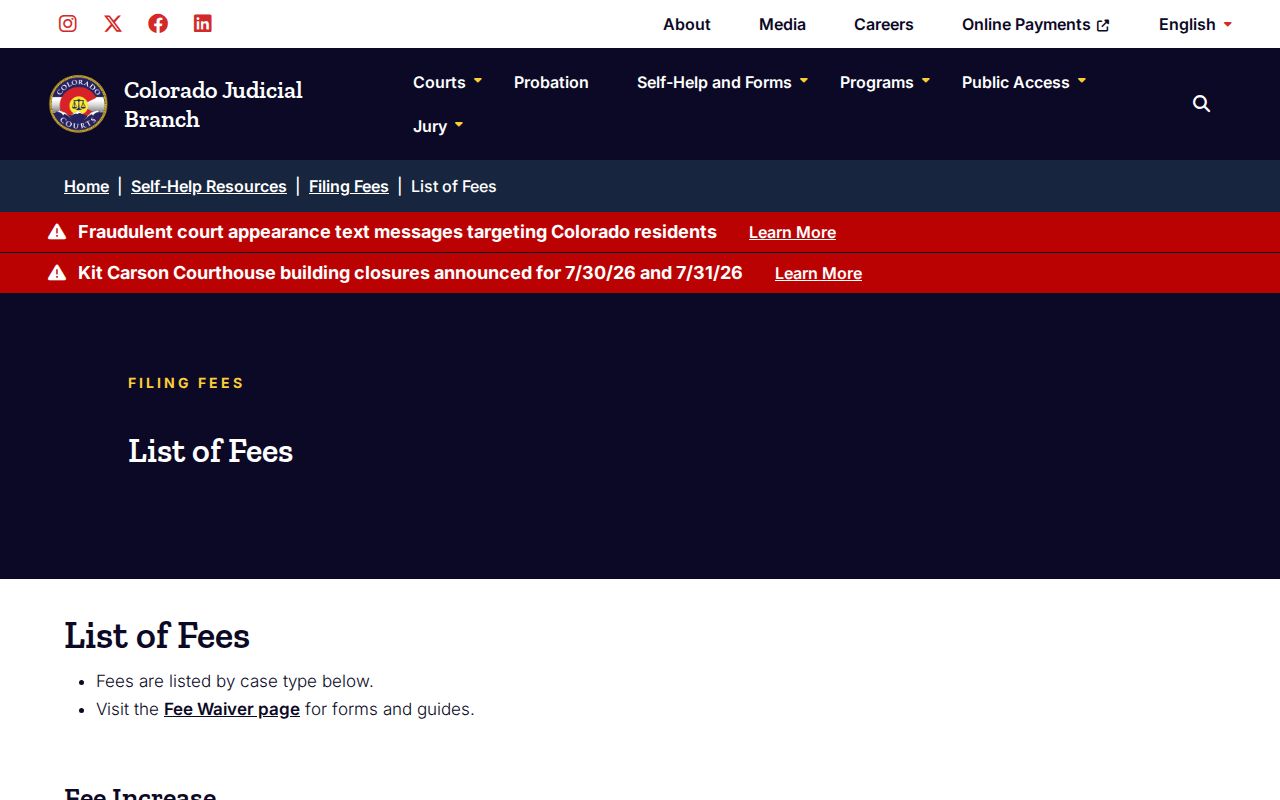
Certification confirms that the copy comes from the court record. It does not add facts beyond the filed document.
If CBI criminal history shows an unknown or missing disposition, obtain the certified final court record and use CBI’s update process. Missing reporting is not proof that a Conejos County case remains pending.
When Conejos Case Search Fails
An older or unscheduled Conejos County criminal case may not appear in the public calendar. Search again with the full case number when available, broaden the date range, and check whether the matter belongs in District, County, or municipal court. Then call the Conejos clerk with the party name and approximate filing year. Ask whether archive retrieval is needed and which document will establish the result.
Do not treat a blank docket search as proof that no file exists. The public tool is built around scheduled proceedings. It does not promise a complete historical index, and sealed matters will not appear like ordinary public cases.
How a Criminal Case Moves
Conejos County cases follow a sequence, though dismissal, diversion, or other rulings can end or change it. The core path is:
Charges Filed → Arraignment → Pretrial → Plea or Trial → Disposition → Sentencing
An arrest or summons may come first. When someone is held, advisement and a bond decision occur early. Prosecutors then decide what to file. Disclosure and motions shape the pretrial stage. A plea or verdict resolves each count, followed by judgment and sentence when there is a conviction.
The Conejos judges and staff page identifies the current bench and clerk personnel serving the court.
Personnel listings help route a current matter, but the clerk remains the record custodian.
Who Holds Conejos Case Documents
One prosecution can produce records in several offices. The sheriff or arresting agency holds its narrative. The jail holds intake and custody data. The 12th Judicial District Attorney files and prosecutes state charges. Conejos Combined Court holds public pleadings and orders. The regional public defender may represent an eligible appointed client, but it is not a public case-record warehouse.
The official Colorado Public Defender office directory routes Conejos matters to the Alamosa Regional Office.
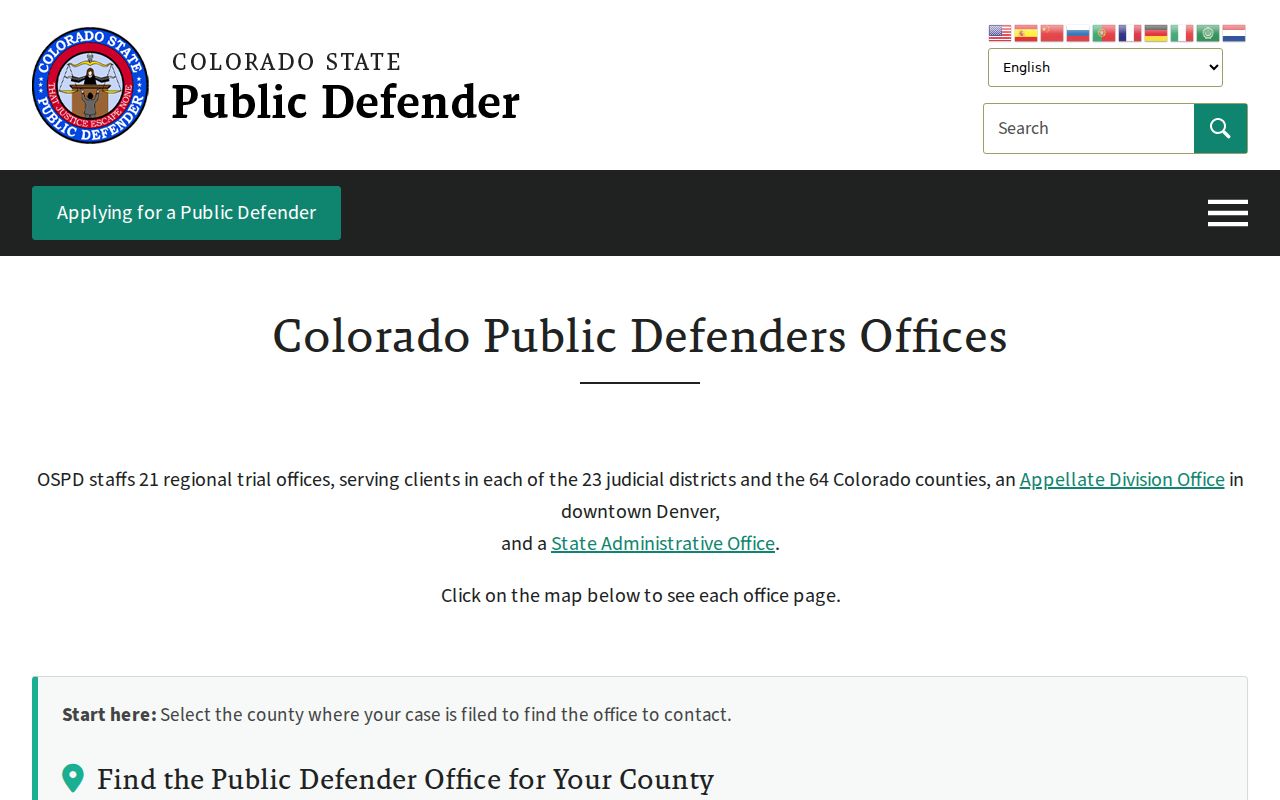
This regional model explains why a Conejos case may involve counsel based in Alamosa while the court file stays with the Conejos clerk.
For case outcome research, request the signed court record. For the officer’s account, request the arrest report from the agency that wrote it. The distinction prevents a calendar entry or booking allegation from being mistaken for the final judicial result.
Case Record Access Restrictions
Colorado court files are generally public unless sealed or otherwise restricted. The Judicial Branch access guide separates case records from administrative records. CCJRA requests go to criminal justice agencies for their own records; they do not replace the court’s case-file process.
C.R.S. §§ 24-72-301 through 309 govern criminal justice records, while §§ 24-72-701 through 710 govern sealing and access after sealing.
Sealed matters, victim and minor identifiers, medical facts, and sensitive active-investigation material may be hidden or redacted. Evidence can require a focused request. Ask for the non-exempt part and the legal basis for any denial. For broader county context, the Conejos County criminal history overview explains how court, sheriff, CBI, and corrections records fit together.
Note: A public docket event identifies a scheduled proceeding, not guilt, sentence, or a complete Conejos County criminal case history.